
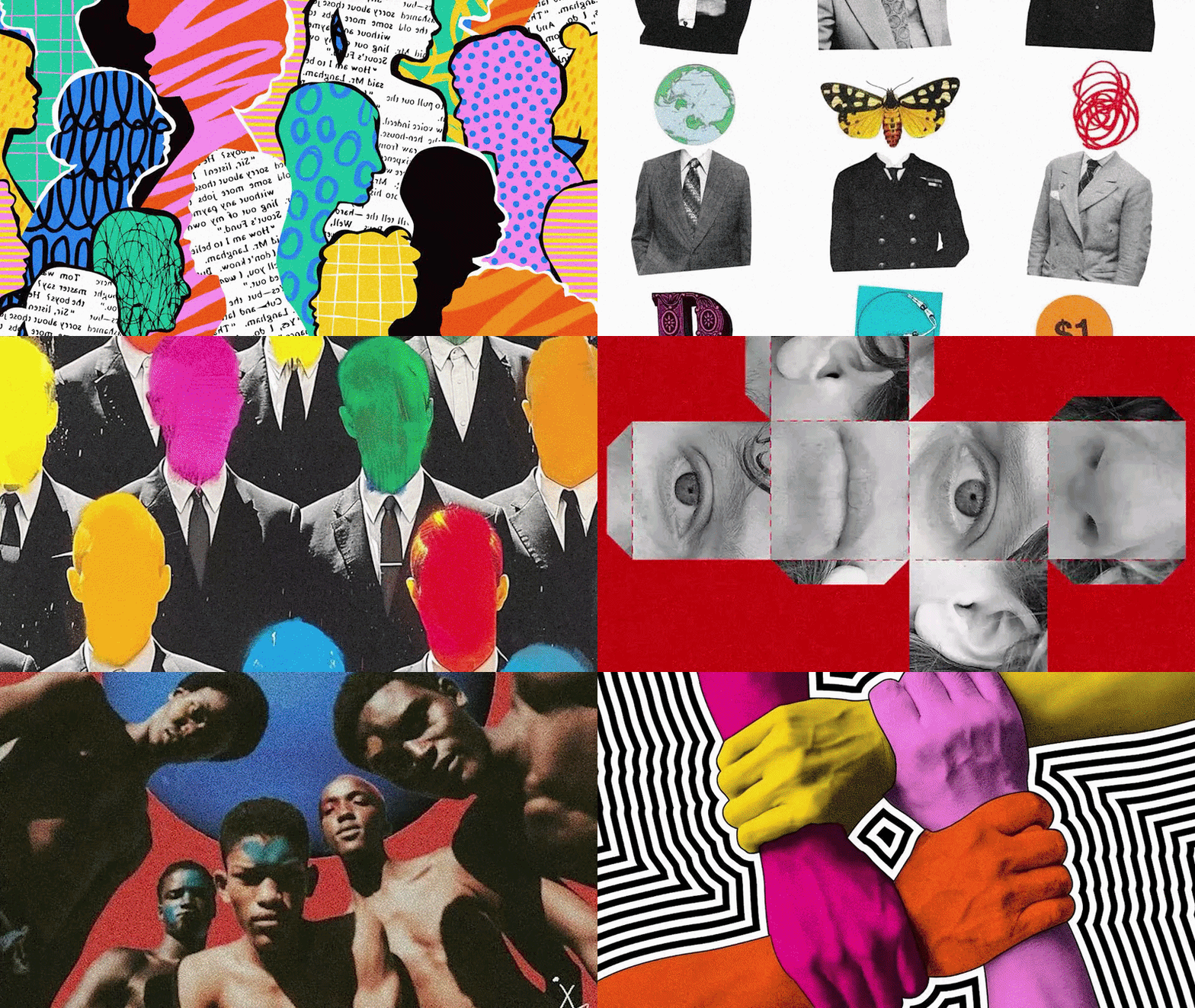
When everything belongs to machines, what will become of us?

Updated: Oct 19
A reflection on purpose, identity, and what awaits us on the other side of automation.

There's a kind of euphoria in the air.
Every day a new tool appears, a new automation, a new promise of productivity. Artificial intelligence writes, answers, calculates, designs, programs, organizes, schedules, summarizes, predicts and, in some cases, even decides.
The world seems to be racing towards a future where everything will be faster, more efficient, more scalable, and more automated.
But, in the midst of this race, perhaps the most important question is not:
"What will technology be capable of doing?"
Perhaps the question is different:
"What do we expect from all this?"
What will we do with the time that's left over?
Because if one day AI or machines do much of what currently occupies our hours, our schedules, our meetings, and our tasks, what will we do with the time that's left over?
Shall we play some more?
Love better?
Expanding the family?
Travel more?
Taking better care of the people we love?
Stop and chat without rushing?
Going home early?
Want to be more present during mealtimes?
Or will we simply fill our free time with new forms of anxiety, comparison, consumption, and performance?
John Maynard Keynes wrote in 1930 that, with advances in technology and productivity, in one hundred years (2030) his grandchildren would work fifteen hours a week. The rest would be time for culture, rest, family, and contemplation.
His economic forecast was correct. Productivity exploded. However, working hours didn't decrease. We work as much as before, in some countries even more.
Keynes was wrong not in economics. He was wrong in anthropology. He underestimated our capacity to invent new ways of occupying our time with anxiety, status, and consumption.
The great contradiction of our time
"He who has a why to live can bear almost any how." - Nietzsche

This is perhaps one of the great contradictions of our time: we have never had so many tools to make life easier, yet we continue to live as if it were becoming increasingly burdensome.
T.S. Eliot was already asking this question in 1934, before the internet, before smartphones, before artificial intelligence. And he wrote three verses that still seem to have been written for our week today…
"Where is the life we have lost in living? Where is the wisdom we have lost in knowing? Where is the knowledge we have lost in information?" - T.S. Eliot
We've never had so much information, but wisdom seems to be lacking.
We've never had so much access, but we still feel distant.
We have never had such a capacity to produce, enrich ourselves, and acquire, yet humanity seems more lost than ever.
And perhaps this happens because we are putting too much energy into solutions before we understand the purpose.
We are asking "how to do it?" before asking "why do it?"
We are creating products, services, methods, companies, content, and technologies without often addressing the most fundamental question:
"For whom and for what purpose are we doing all this?"
Movement without direction is not progress.
A person or a company without purpose is like a boat setting sail without knowing where it's going. It may have a powerful engine, a talented crew, enough fuel, and even the best map available. But if there is no destination, any direction becomes just movement. And movement without direction is not progress. It's merely displacement.
No map can help locate someone who doesn't know where they're going.
Perhaps that's why so many people are tired, even when full of opportunities. Busy, but without clarity. Growing, but without peace. Building, but without knowing exactly what they are trying to build.
There is a profound difference between progress and direction.
The "why" still belongs to the human soul.
Artificial intelligence can accelerate processes. It can reduce costs. It can multiply deliveries. It can open extraordinary paths. But it cannot answer, for us, the question about the meaning of our journey.
She can help with the "how" .
But the "why" still belongs to the human soul.
And perhaps this is where purpose becomes so important.
Purpose is not just a pretty phrase on the wall.
It's not an institutional slogan.
It's not an attempt to appear more established in the market.
Purpose is what you do based on who you are.
And that changes everything.
Before doing, there is being.
Because before defining what we want to do, we need to understand who we are. Before choosing what we want to have, we need to discern what truly governs us from within.

Before building companies, launching projects, accumulating assets, scaling operations, or automating processes, we need to return to a simple, age-old, and profoundly relevant question:
"Who am I?"
It's curious to think that when someone starts learning English, one of the first lessons is the famous verb " to be" .
To be.
Before learning to say what one does, what one has, what one wants, or where one is going, a person learns to conjugate the act of being.
I am.
You are.
He is. She is. They are.
It seems basic. But perhaps that's exactly why it's so essential.
It's impossible to properly combine "doing" without first understanding "being."
You can't sustain having things without first maturing in being.
You can't answer "to do" or "to have" without going through "to be" .
Combining life out of order
Perhaps many people are trying to juggle life out of order.
We want to do more, have more, achieve more, be more visible, sell more, produce more.
Erich Fromm, the German philosopher, wrote in his book "To Have or To Be," published in 1976, that modern man had become increasingly adept at possessing more and being less. Almost fifty years later, the question remains more relevant than ever.
"Modern man accumulates things, but empties himself of himself. He possesses more and is less." - Erich Fromm
But who are we when all of this escalates?
Who do we become when we achieve what we ask for?
What happens to our character when we gain speed?
What happens to our family when the business grows?
What happens to our soul when productivity finally kicks in?
These questions matter because technology without purpose can only further complicate our confusion.
Automation without direction can only accelerate us down the wrong path.
Scale without identity can only multiply what has not yet been healed.
And intelligence, without wisdom, can become merely a more efficient way of distancing ourselves from what is essential.
It's not about rejecting the machines.
On the contrary.
Perhaps artificial intelligence is one of the greatest opportunities of our generation. But precisely for that reason, it demands an even more human question from us.
When machines take over everything, what will become of us? If machines take over some of the work, what will we do with the part of life that returns to our hands?
Because perhaps the future isn't just about machines doing more.
Perhaps the future will be about humans remembering better.
Remember that children are not interruptions to the calendar.
Friends are not distractions from productivity.
Rest is not failure.
Family isn't just an afterthought in the schedule.
Being present is not a waste of time.
Meaningless profit leads to poverty in another way.
Growth without purpose can only increase the size of the void.
The question that remains
In the end, perhaps the question isn't whether artificial intelligence will change the world.
She's going.
The question is whether we'll know where we want to go when it changes.
Because if everything gets faster, but we remain directionless, we'll only get more lost in efficiency. If everything becomes more automated, but we remain disconnected from purpose, we'll only outsource tasks while continuing to carry the same absence. If everything gets smarter, but we don't become wiser, we'll have increasingly better machines serving increasingly confused humans.
Therefore, before moving on to the next tool, we might need a break.
Before the next release, one question.
Before the next automation, a return visit.
Before asking "what can I do with this?" , perhaps it would be better to ask:
"Who am I becoming with all this?"
May this week be an invitation to think honestly.
It's not just about what you're building.
But it's about who you're becoming as you build.
And perhaps the final question is this:
If everything you do goes right, if your company grows, your income increases, your routine is automated, and you gain more time in your life, would you know, clearly, who all this would serve and what purpose it serves?
"An unexamined life is not worth living." — Socrates



Comments