

Every Second Counts
- Pedro Dias
- Jul 20
- 4 min read

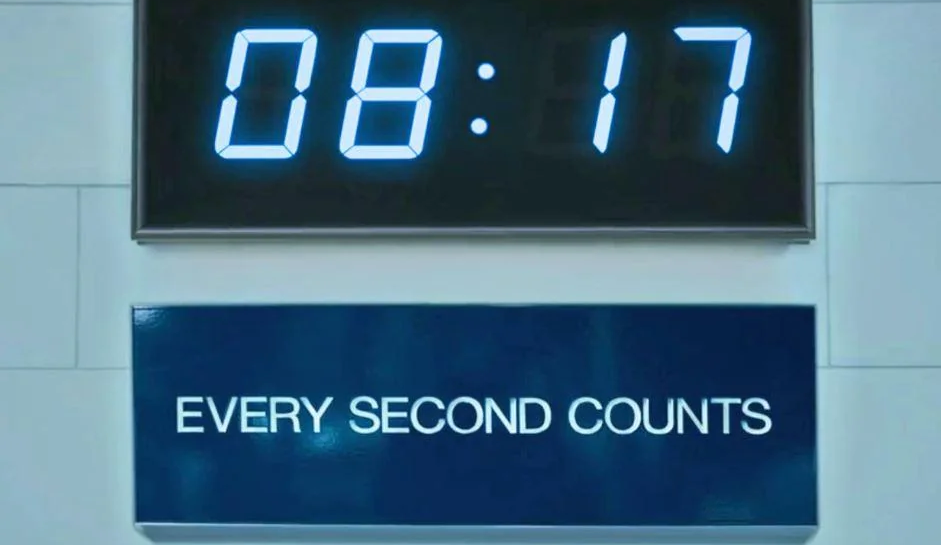
Last week, I was watching the final season of The Bear on Disney. There's this sign in the kitchen with a phrase that appears all the time: "Every Second Counts".
Inside that kitchen, the meaning is obvious. High performance, pressure, precision. A second's delay ruins the dish and the entire restaurant's performance. It makes perfect sense. But I've been thinking there's another interpretation of that phrase.
Perhaps every second doesn't just count because we need to produce more. Perhaps every second counts because every second is your life unfolding.
It's not a lack of time, it's the relationship with time.
I talk to many business owners and leaders who report the same problem: lack of time. If they had more time, they would take better care of the company, think about strategy, rest, be more present at home, and start that project that's been stalled for two years. The math seems simple: more hours in the day would solve everything.
But it's rarely about the amount of time. It's about how we try to live the time we already have.
The generation that wants to live five phases at the same time.
There's a whole generation of good people trying to live through all five stages of life at the same time.
He wants to build the company and reap the rewards now.
They want to grow quickly and already have the peace of mind of someone who has already passed through the most intense phase.
He wants to launch a new project without abandoning any of the old ones.
They want freedom without going through the process that builds it.
Ultimately, it's an attempt to live the timeline backward: you look at the outcome you want and get frustrated because today's reality doesn't yet resemble it.
What almost no one wants to hear about the process.

And here's what almost no one wants to hear: perhaps the thing we understand least today is process.
We live driven by results, and that's not a flaw. Leaders need to know where they want to go. The problem begins when the journey there becomes just another thing to endure. Building the company becomes the price to pay for having a consolidated business. The first years of one's career become the price of recognition. Today's effort becomes the price of a better life someday. Without realizing it, we transform the present into a waiting room.
And he's always waiting for something to end so he can finally start living.
When the company grows. When the funding round goes through. When this project is finished. When the schedule calms down.
The future has a cruel twist: when it arrives, it instantly becomes the present, and we're already inventing a new future to pursue.
The goal of 10 million becomes 50.
The position you wanted opens up space for a bigger one.
The freedom you imagined fades behind the responsibilities that have appeared.
The game goes on.
Ambition is not anxiety.
There's nothing wrong with wanting more. Ambition is part of life. What's tiring isn't ambition itself, but anxiety disguised as ambition.
These are different things. Ambition looks to the future and works in the present. Anxiety tries to live the future ahead of time. A large part of our exhaustion comes from this, from this rush to reap what is still taking root. We want the clarity of someone with twenty years of experience after two. We want a newly born company to operate with the efficiency of a mature company. When this doesn't happen, we interpret the natural process as if it were a problem.
The process shapes those who will sustain the achievement.
Understanding the process means accepting that some things don't accelerate beyond a certain point.
Relationships are built.
Trust develops.
Culture is formed.
Reputation is earned.
The idea is maturing.

It's possible to take shortcuts, but it's not always possible to skip steps. And there's a part of this that's easy to ignore: the process isn't just about the achievement between you and your goal. It's about shaping the person who will be able to sustain what you want to achieve.
Therefore, the meeting, which seems small, matters.
Difficult conversations matter.
Mistakes matter.
The decision that didn't work out matters, because it builds a discernment that no theory can teach.
Perhaps maturity is this: looking towards where you want to go without despising where you are.
Every Second Counts is an invitation to be present.
And this is where The Bear's sign takes on a different meaning for me.
Every Second Counts doesn't have to be a reminder that time is running out.
It could be an invitation to be present.
Because not every second needs to produce something to have apparent value.
Rest matters.
Lunch with the kids counts.
Conversation without a set agenda matters.
Silence before making a decision matters.
Managing time vs. inhabiting time
There is a difference between managing time and inhabiting time.
Managing is necessary: there are goals, deadlines, people who depend on your decisions. But inhabiting time means understanding that life doesn't begin after your schedule is empty. It's happening within your schedule, right now, in the company that hasn't yet reached where you wanted it to be, in the phase that seems confusing, in the project that's still taking shape.
I've been carrying around this phrase for a while now:
"Life is a gift to be lived in the present, as a gift."
It sounds like a play on words, and maybe it is, but there's something to it. We've been trained to treat the present as an investment in the future. And it is that too. But it's not just that. The present is life itself.
It's still necessary to plan, build, and look ahead. Hope is also a way of working. What can be changed is to stop treating the present as a place you're just trying to pass through. Because when this cycle ends, another will begin. After this goal comes another. There will probably never be that final point where you can say: okay, now I can live.
Delivery matters.
The result matters.
Winning matters.
The path too.
Every second counts because every second is a gift.


Comments